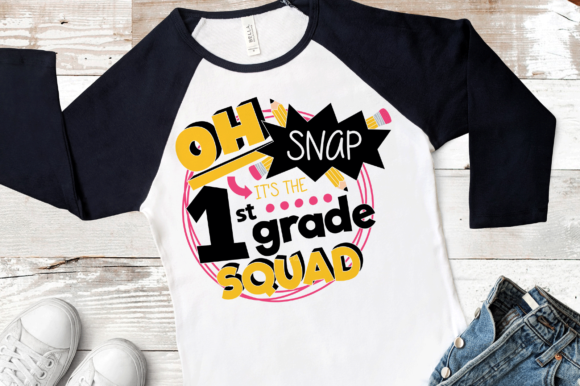
Oh Snap It s the 1st Grade Squad
As a designer who spends more time staring at stitch density charts than actual artwork, I approach every new digital asset with a mix of hope and skepticism. The market is flooded with generic clip art, so finding a design that balances aesthetic appeal with technical viability is rare. When Oh Snap It s the 1st Grade Squad landed on my desk, I didn’t just see a cute quote; I saw a potential bestseller for back-to-season collections. But does it hold up under the needle? After running several test stitches and analyzing its structural integrity, here is my honest breakdown of this retro-style graphics piece.
First Impressions: Mood and Visual Personality
The immediate draw of Oh Snap It s the 1st Grade Squad is its nostalgic energy. The retro style isn’t just a trend; it’s a specific visual language that resonates with millennial parents and teachers alike. The typography feels bold yet playful, suggesting a fun, confident attitude toward starting first grade. From a design perspective, the layout is clean, which is crucial for embroidery. Unlike complex illustrations that can turn into a muddy mess when stitched, this design relies on strong shapes and clear negative space.
The theme hits a sweet spot between "cute" and "cool." It avoids being overly childish while still celebrating the milestone. This makes it versatile. It works equally well for a boy’s cap or a girl’s sweatshirt. The visual personality is upbeat, which translates directly to customer engagement. When a buyer sees this on a mockup, they immediately imagine the pride of a parent or the camaraderie of a classroom. That emotional connection is what drives sales in the Crafts category, specifically within the Graphics niche where users seek ready-to-use assets.
Real-World Application: Where This Design Shines
I’ve tested various layouts for Oh Snap It s the 1st Grade Squad, and certain applications stand out as natural fits. The most obvious candidate is custom apparel. Specifically, this design excels on crewneck sweatshirts and heavyweight t-shirts. The retro vibe pairs perfectly with heather grey or navy blue fabrics, creating a premium look that justifies a higher price point in your Etsy seller shop or boutique inventory.
Beyond clothing, consider the personalized gift angle. A tote bag embroidered with this phrase becomes an instant conversation starter for school drop-offs. It transforms a standard canvas bag into a statement piece. Similarly, for baby items, such as a onesie or a bib, the design offers a charming way to mark the transition from preschool to formal schooling. However, the scale matters here. On smaller items like a baby embroidery project, you must ensure the text remains legible. If the letters are too small, the satin stitch might pucker, ruining the crispness of the message.
Another strong use case is the embroidered patch. Many crafters love adding patches to denim jackets or backpacks. This design has the structural balance to work as a standalone patch, provided you add a proper border. It also serves as excellent content for digital product sellers. You can create printable mockups featuring this design to showcase how it looks on various products before the customer even buys the physical item. These design assets help buyers visualize the final result, increasing trust and reducing return rates.
Technical Performance and Stitch Clarity
When evaluating any machine embroidery design, clarity is king. Oh Snap It s the 1st Grade Squad performs well because it likely utilizes a mix of fill stitches for background elements and satin stitches for outlines or key letters. This combination ensures depth without excessive bulk. However, the success of the finish depends heavily on your choice of thread colors. High contrast is non-negotiable for retro designs. If you are stitching on dark fabric, using light, vibrant threads will make the pop-out effect much stronger. Conversely, low-contrast thread choices can make the text disappear into the fabric texture.
Stitch density is another critical factor. While I cannot provide exact stitch counts without the source file, designs with dense fill areas require careful attention to stabilizer choice. For this type of graphic, a cut-away stabilizer is often recommended for garments to prevent distortion over time, especially if the item will be washed frequently. If you are working on a tea towel or kitchen towel, a tear-away stabilizer might suffice, but always test on scrap fabric first. The goal is to maintain the integrity of the retro curves and angles without causing the fabric to pucker around the edges.
Where to Exercise Caution
No design is perfect for every surface. There are specific scenarios where Oh Snap It s the 1st Grade Squad might struggle. Avoid placing this on highly textured fabrics like bouclé or heavy wool unless you have advanced stabilization skills. The needle penetration could become inconsistent, leading to skipped stitches. Similarly, stretchy knits require extra care. If the fabric stretches during stitching, the design may distort, making the text appear wavy or uneven.
Curved surfaces, such as baseball caps or bucket hats, present their own challenges. While the design is flexible enough to follow a curve, tight corners in the lettering might not lay flat if the hoop size is too small. Always check the hoop size compatibility before committing to a curved application. Additionally, be mindful of small details. If the design includes tiny decorative accents or fine lines, these may get lost in thicker fabrics or wash out after repeated laundering. For durable commercial embroidery projects, prioritize larger, bolder elements that withstand wear and tear.
Practical Designer Notes for Success
To ensure your finished product looks professional, follow these practical steps:
- Test First: Never run a production batch without testing on the actual fabric. Check for puckering, thread breaks, and color accuracy.
- Black and White Mockups: Convert the design to black and white in your software to check contrast levels. If it doesn’t read clearly in grayscale, it won’t stitch clearly.
- Stabilizer Selection: Match the stabilizer to the fabric weight. Heavy fabrics need heavy support; lightweight fabrics need delicate handling.
- Licensing: Before selling handmade products or small shop products, confirm the licensing terms. Some digital embroidery files allow commercial use, while others are personal use only. Protect your business by verifying these details.
- Thread Quality: Use high-quality polyester or rayon threads. Cheap threads can break easily and lack the sheen that makes retro designs shine.
Final Verdict
Oh Snap It s the 1st Grade Squad is a solid addition to any embroiderer’s library. It captures the zeitgeist of the back-to-school season with a stylish, retro twist that appeals to modern tastes. Whether you are creating custom apparel, preparing holiday gifts, or expanding your craft business offerings, this design offers a reliable foundation for creating engaging, high-quality products. By paying attention to stitch density, fabric choice, and proper stabilization, you can transform this simple graphic into a standout finished product that customers will love.