Kawaii Donuts Embroidery Review
As a designer who spends half my day staring at stitch patterns and the other half trying to explain to clients why their logo won’t work on a baseball cap, I approach every new machine embroidery design with a mix of optimism and skepticism. We have all seen designs that look perfect in a digital preview but turn into a tangled mess once they hit the hoop. Today, I am putting the Kawaii Donuts file through its paces—not just as a pretty picture, but as a viable asset for real-world projects, small business inventory, and personalized gifts.
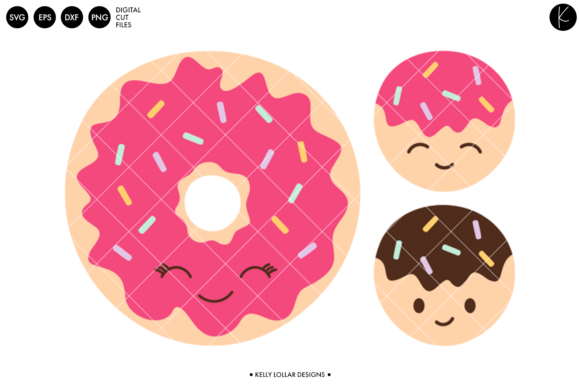
This graphics set features a mama donut and her two donut holes, offering a playful "mommy and me" theme. It falls squarely into the crafts category, but its potential extends far beyond simple hobbyist scrapbooking. If you are an Etsy seller, a boutique owner, or a crafter looking to add value to your handmade product line, understanding how this design translates from screen to fabric is crucial. Here is my practical breakdown of how Kawaii Donuts performs in actual embroidery situations.
First Impressions: Mood and Visual Personality
The immediate appeal of Kawaii Donuts is its charm. The aesthetic is undeniably cute, leveraging the popular kawaii style with rounded shapes and expressive details. For designers, this visual personality is a double-edged sword. On one hand, it creates an instant emotional connection with buyers, particularly those looking for personalized gift options for families. On the other hand, the "cute" factor relies heavily on clean execution. If the stitches are muddy or the colors clash, the cuteness vanishes, replaced by a messy appearance.
Layout-wise, the grouping of the three donuts suggests a balanced composition. It feels natural for centered placements on sweatshirt embroidery or left-chest placements on custom apparel. The design has enough visual weight to stand alone without needing excessive text, though adding a cheeky quote or names—as suggested in the description—can elevate it from a simple graphic to a sentimental keepsake. This versatility makes it a strong candidate for holiday embroidery campaigns, especially around Mother’s Day or birthdays.
Real-World Application: Where Does It Fit?
I recently considered using this design for a custom order involving a set of matching family aprons and a tote bag for a local craft fair booth. Here is how Kawaii Donuts held up in those scenarios:
- Tote Bag Design: Canvas bags are forgiving, but they can be thick. The design needs enough contrast to pop against the natural or colored canvas. When tested on a light beige bag, the pastel thread colors looked soft and inviting, perfect for a digital product seller creating mockups for print-on-demand services.
- Baby Embroidery: This is perhaps the strongest use case. Soft bodysuits and muslin blankets benefit from gentle, rounded motifs. The "mama and babies" theme resonates deeply with new parents. However, on tiny baby items, scale is everything. You must ensure the design fits within the available hoop size without feeling cramped.
- Embroidered Patch: Converting this into a standalone patch for denim jackets or backpacks is a smart move for commercial embroidery businesses. The distinct shapes allow for clean applique edges if you choose to use an applique design technique, adding texture and durability.
- Nursery Decor: Pillow covers and wall hangings in neutral tones (cream, sage, blush) allow the donut colors to shine. This works well for printable mockup assets, helping sellers visualize the final finished product before committing to production.
Technical Considerations and Stitch Clarity
No matter how beautiful a design looks in JPEG form, its success depends on technical execution. When evaluating Kawaii Donuts, I focused on several key areas that affect stitching clarity and product value.
Stitch Density and Type: A good embroidery file balances fill stitches with satin and running stitches. Fill stitches provide color coverage, while satin stitches define outlines. If the fill density is too high, the fabric may pucker; if too low, the base material might show through. For this design, I recommend checking the stitch count in your software. If the donut sprinkles rely on tiny running stitches, ensure your machine can handle them cleanly without breaking thread. High-density areas should be reviewed to prevent needle breakage on thicker fabrics like sweatshirt fleece.
Thread Colors and Contrast: The choice of thread colors is critical. Pastels look adorable but can disappear on light backgrounds. Always test your design on the actual fabric you plan to use. I often advise creators to run a black-and-white version of their mockup to check contrast levels. If the donut blends into the shirt, the design fails. Darker threads or a contrasting background fabric (like navy blue or charcoal gray) can make the pastel tones pop significantly more.
Fabric Texture and Stabilizer: The texture of your fabric plays a huge role. Smooth cottons and poly-cotton blends are ideal. Textured fabrics like heavy tweed or loose-weave linen can distort the fine details of the kawaii faces. Furthermore, using the correct stabilizer is non-negotiable. For stretchy knits like t-shirts or caps, a tear-away stabilizer helps maintain shape, while woven fabrics might require cut-away stabilizer for long-term durability, especially for items that will undergo frequent washing.
Pitfalls to Avoid
While Kawaii Donuts is versatile, it is not suitable for every project. There are specific scenarios where this design should be used with caution or avoided entirely:
- Small Hoop Sizes: If you are working with very small hoops, the detail on the donut faces may become indistinguishable. Simplified versions or larger placements are better.
- Curved Surfaces: Embroidering directly onto curved surfaces like the front of a baseball cap can distort the circular shapes of the donuts. It is often better to embroider flat panels first or use a specialized cap frame.
- Thin or Stretchy Fabrics: Without proper support, thin fabrics may pucker under the tension of the fill stitch. Similarly, highly stretchy materials like spandex blends require significant stabilization to prevent distortion.
- Dense Stitch Areas: Avoid placing this design over existing seams, zippers, or pockets where the fabric is already thick. This increases the risk of needle deflection and uneven stitching.
Final Verdict for Designers and Sellers
From a professional standpoint, Kawaii Donuts is a solid addition to any design assets library. It taps into a timeless, lighthearted theme that appeals to a broad demographic. Its strength lies in its adaptability—it works equally well as a quick personal project or as part of a curated collection for a small shop product line.
For creative entrepreneurs, the key to maximizing profit is presentation. Use high-quality mockups that showcase the design on various garments. Highlight the "mommy and me" aspect in your listings, as this encourages bundle purchases. Always confirm licensing terms before selling finished items or distributing the digital embroidery file to others. Ensure you have the right to use the design commercially, and always disclose any restrictions to your customers to build trust.
Before launching a large production run, I strongly advise testing the design on scrap fabric. Check the thread colors under different lighting conditions, inspect the stitch density for puckering, and verify that the small details remain clear after washing. By taking these practical steps, you can transform a simple graphic into a cherished embroidery project that customers love and return to buy again.