Crunching Numbers Craft File Vector Review
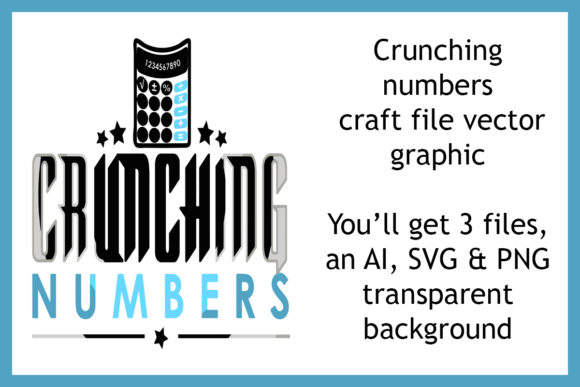
As a designer who spends half my day staring at digitizing software and the other half stitching test samples, I have learned to be skeptical of any graphic that claims to be "ready for anything." When I first pulled up the Crunching Numbers Craft File Vector, my initial reaction was one of cautious optimism. The concept is straightforward: a calculator graphic integrated with a quote, presented in SVG, AI, and PNG formats on a transparent background. It sounds simple enough, but simplicity in embroidery design is often where things go wrong. Too much detail gets lost; too little looks cheap. I wanted to see if this design could actually hold up in a real-world commercial setting or if it was just another decorative clipart piece destined for the recycle bin.
The mood of this design is immediately professional yet playful. It targets a very specific niche—accountants, CPAs, mathematicians, teachers, and tax professionals—but does so with a visual language that feels approachable rather than stiff. For an embroidery project, this balance is crucial. You want the recipient to smile when they see their profession celebrated, not feel like they are wearing a corporate uniform. The calculator motif provides a strong central anchor, which is excellent for stability during the stitching process, while the accompanying quote adds personality. This makes it particularly effective for personalized gifts, such as end-of-year bonuses for staff or graduation presents for students entering finance fields.
Real-World Application: From Screen to Stitch
I decided to put the Crunching Numbers Craft File Vector through its paces by envisioning several common use cases. First, imagine a custom embroidered tote bag for a local accounting firm’s client appreciation event. A tote bag offers a large, flat canvas, allowing the full graphic to breathe. The calculator icon can serve as the focal point, perhaps centered on the front panel, with the quote elegantly curved along the bottom or top edge. In this context, the design works beautifully because the scale allows the details of the calculator buttons and the text to remain legible. It transforms a standard promotional item into a boutique product that customers will actually want to carry.
Another compelling scenario is a sweatshirt embroidery project aimed at college students during tax season. Here, the design might be scaled down slightly and placed over the heart or on the back yoke. The heavy fabric of a sweatshirt supports denser stitch areas well, ensuring that the graphic doesn’t pucker or distort. However, you must consider the thread colors carefully. A dark navy or black sweatshirt would require bright, contrasting threads for the calculator body and white or yellow for the text to ensure readability. If you are creating handmade products for an Etsy shop, this kind of seasonal relevance drives engagement. People are searching for "tax season gifts" or "CPA humor apparel," and having a design that hits those keywords visually is a significant advantage.
For smaller items, such as baby clothes or nursery decor, the application shifts. While the theme is adult-oriented, a simplified version could work for a future-focused gift, celebrating a child born into a family of accountants. Alternatively, using the design on an apron for a parent who balances bookkeeping with cooking creates a relatable narrative. The key here is placement. On an apron, the design should avoid high-friction zones near the waist tie to prevent premature wear. Instead, centering it on the chest area ensures the machine embroidery design remains pristine through countless washes.
Technical Considerations and Fabric Compatibility
Not every surface is created equal, and knowing where to exercise caution is what separates a novice from a pro. The Crunching Numbers Craft File Vector contains fine lines and small geometric shapes within the calculator graphic. These elements demand precision. If you attempt to stitch this on a textured fabric, such as a chunky knit or a rough burlap, the definition will suffer. The texture competes with the stitch lines, causing the image to look muddy. Similarly, thin fabrics like silk or lightweight rayon may not support the stabilizer needed for this design without showing visible backing marks on the reverse side. In these cases, a cut-away stabilizer is non-negotiable to maintain structural integrity.
Stretchy fabrics present another challenge. Caps, hats, and fitted t-shirts move and stretch during wear. If the stitch density is too high, the embroidery can restrict the fabric’s natural movement, leading to distortion over time. I recommend testing the design on scrap pieces of your target material first. Check how the satin stitch borders handle the curves of the calculator edges. If the stitches bunch up, you may need to adjust the underlay settings in your digitizing software before exporting the final file.
Dark fabrics require thoughtful thread selection. The calculator graphic likely relies on contrast to define its shape. On a dark background, using light-colored threads for the main body of the calculator will make it pop, but you must ensure the text remains legible. Sometimes, adding a subtle outline or changing the font weight in the digitizing phase can improve clarity. Also, consider the lighting conditions where the finished product will be viewed. A design that looks sharp under studio lights might lose detail in dimmer retail environments.
Visual Appeal and Brand Consistency
One of the strongest aspects of this design is its ability to convey professionalism without sacrificing charm. For small business owners selling commercial embroidery services, offering designs that resonate with specific professions builds trust. When a customer sees a well-executed embroidered patch featuring a calculator and a witty quote, they perceive the maker as someone who understands their industry. This attention to detail enhances the perceived value of the handmade product. It’s no longer just a generic logo; it’s a tailored statement.
The versatility of the source files (SVG, AI, PNG) also plays a role in the marketing phase. As a digital product seller, you can create stunning printable mockups to showcase the design on various backgrounds. Using the transparent PNG allows you to place the calculator graphic seamlessly onto photos of tote bags, mugs, or shirts for your online store. This flexibility helps you reach a wider audience, from craft fair attendees browsing physical goods to international buyers purchasing digital embroidery files for their own machines.
Practical Designer Notes for Success
- Test Before You Sell: Always run a sample on the actual fabric you plan to use. Check for puckering, thread breaks, and color accuracy.
- Stabilizer Choice: Use the appropriate stabilizer for your fabric weight. Hoop size constraints may limit your options, so measure your hoop carefully before starting.
- Thread Contrast: Inspect your design in black and white mode to ensure sufficient contrast between the background and the stitch colors.
- Licensing: Confirm the licensing terms before selling finished items. Some vectors allow commercial use, while others are restricted to personal projects only.
- Detail Inspection: Zoom in on the calculator keys and text. If details are too small for the chosen needle size, consider simplifying the design or increasing the scale.
In conclusion, the Crunching Numbers Craft File Vector is a solid addition to any designer’s library, particularly for those targeting professional niches. Its clear imagery and relevant theme make it suitable for a wide range of applications, from tote bag design to holiday embroidery gifts. By paying attention to fabric choice, stitch density, and proper stabilization, you can transform this vector graphic into a high-quality finished product that delights customers and strengthens your brand. Whether you are an Etsy seller looking to expand your catalog or a hobbyist making a unique gift, this design offers a reliable foundation for creative success.