100 Days of Adventure Embroidery Review
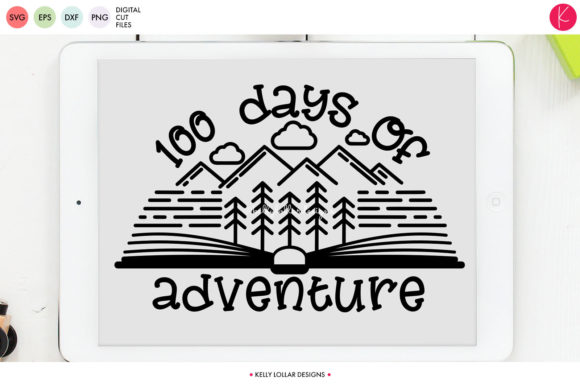
As a designer who spends half my life staring at digitized files and the other half troubleshooting stitch errors on the hoop, I don’t just look for pretty pictures. I look for viability. When I was handed 100 Days of Adventure, described as an open book nature-themed cut file for the 100th day of school, my first instinct wasn’t to imagine it on a cute shirt. It was to ask: will this hold up in production? Will it translate well from screen to fabric? And most importantly, will a customer feel that immediate "I need this" connection when they see the finished product?
The market for back-to-school embroidery is saturated. Every Etsy seller and craft fair vendor is fighting for attention with generic numbers and standard fonts. That is exactly why 100 Days of Adventure caught my eye. It isn’t just a number; it’s a narrative device. By combining the concept of reading or learning (the open book) with exploration (nature/adventure), it taps into a specific emotional niche that parents and teachers are actively seeking. But does the execution match the promise? Let’s break down how this design performs in real-world scenarios.
First Impressions and Visual Personality
The mood of 100 Days of Adventure is undeniably whimsical yet grounded. The inclusion of nature elements suggests growth, outdoor play, and curiosity—themes that resonate deeply with early education milestones. From a pure aesthetic standpoint, the layout feels balanced. It doesn’t scream for attention with chaotic shapes; instead, it invites the viewer in. This is crucial for embroidery because complex, jagged designs often get lost in the thread count or become frustrating to stitch out.
For a machine embroidery design, the visual weight is distributed well. It avoids the common pitfall of having too much negative space that looks empty once stitched, or conversely, dense clusters that might pucker thin fabrics. The "open book" aspect provides a strong central anchor, while the nature accents add organic flow. It feels like a design meant to be cherished, not just worn for a week and forgotten. This longevity in style is what separates a fleeting trend from a staple in a craft business inventory.
Real-World Application: Beyond the T-Shirt
While the product description mentions shirts for girls, boys, and teachers, limiting your vision to basic tees is a missed opportunity. In my experience testing various embroidery files, the most profitable items are often those that surprise the buyer. Here is where 100 Days of Adventure shines in practical application:
- Custom Apparel and Sweatshirts: This is the obvious choice, but consider oversized sweatshirts for teachers or cozy hoodies for students. The design works beautifully centered on the chest or placed slightly off-center for a more modern, boutique feel. The nature theme pairs exceptionally well with earth tones, olive greens, and soft creams, allowing the thread colors to pop without clashing.
- Tote Bag Design: A canvas tote embroidered with this motif is a high-value item. Parents love functional gifts that also celebrate milestones. The sturdy fabric of a tote bag handles the stitch density of a detailed design like this much better than a thin t-shirt, resulting in a crisp, professional finish that justifies a higher price point.
- Baby Embryoidery and Nursery Decor: Think about onesies for the "100 days old" milestone, which often coincides with similar seasonal timing. Alternatively, use this as a design asset for nursery wall art or pillow covers. The gentle nature theme makes it gender-neutral enough to appeal to a broad audience, increasing your potential market reach as an Etsy seller.
- Personalized Gifts and Aprons: For teachers, a personalized apron embroidered with this quote is a gift they will actually use. It adds a touch of personality to their classroom routine. Similarly, kitchen towels or tea towels can serve as affordable impulse buys at craft fairs, leveraging the handmade product appeal.
Technical Considerations and Potential Pitfalls
No design is perfect, and transparency is key for any serious reviewer. While 100 Days of Adventure has strong artistic merit, there are specific situations where you need to exercise caution. Embroidery is a physical medium, and digital perfection does not always guarantee stitching success.
First, consider the hoop size. If you attempt to scale this design down too small, you risk losing the integrity of the nature details. Tiny leaves or intricate book pages may merge into indistinguishable blobs if the resolution isn't high enough or if the stabilizer choice is incorrect. Always test on scrap fabric first. I recommend checking the design in black and white mockups to ensure the contrast holds up, then testing it on both light and dark fabric backgrounds to see how the thread colors interact with the base material.
Secondly, be mindful of fabric texture and stretch. Applying this to stretchy knits requires a heavy-duty stabilizer to prevent distortion. On textured fabrics like burlap or thick fleece, the fine details might get swallowed by the pile. Also, avoid placing this on curved surfaces like caps unless you have significant experience with curved surface digitizing, as the "open book" shape might warp uncomfortably around the brim.
Another critical factor is the type of stitches used. If the design relies heavily on satin stitch for outlines, ensure the underlay is sufficient to keep edges clean. If it uses fill stitch for the background, check that the density isn't so high that it creates a stiff, cardboard-like feel on delicate garments. For applique design variations, make sure the seam allowances are clear and that the underlying layers won't show through the top layer during wear.
Impact on Brand Value and Customer Trust
Using a well-conceived design like 100 Days of Adventure directly impacts how customers perceive your brand. In the world of commercial embroidery and small shop products, presentation is everything. A design that looks thoughtful and cohesive signals professionalism. When a customer sees a finished product that aligns perfectly with the marketing image, their trust in your quality increases.
This design also enhances giftability. The "adventure" and "learning" themes evoke positive emotions associated with childhood growth. Buyers aren't just purchasing thread and fabric; they are purchasing a memory marker. This emotional connection drives engagement and encourages social sharing, which is free marketing for your printable mockup listings. Furthermore, using unique, thematic designs helps differentiate your design assets from the sea of generic clipart available online.
Final Verdict for Makers and Sellers
100 Days of Adventure is a versatile, emotionally resonant design that offers more value than a standard numeric graphic. It bridges the gap between educational milestones and creative expression, making it suitable for a wide range of embroidery projects. From custom apparel to embroidered patches and home decor, it has the flexibility to fit into multiple niches within the crafts and graphics categories.
However, success depends on execution. As a designer, I advise you to treat this as a starting point for creativity, not just a plug-and-play solution. Test your stabilizer choices rigorously. Pay attention to thread colors; consider using variegated threads for the nature elements to add depth. Confirm your licensing terms before listing this as a digital embroidery file or selling small shop products. If you handle the technical details with care, this design has the potential to become a bestseller in your shop, appealing to parents, teachers, and anyone who believes that learning is the greatest adventure of all.